"I have always been passionate about [field] since childhood and have dreamed of studying abroad."
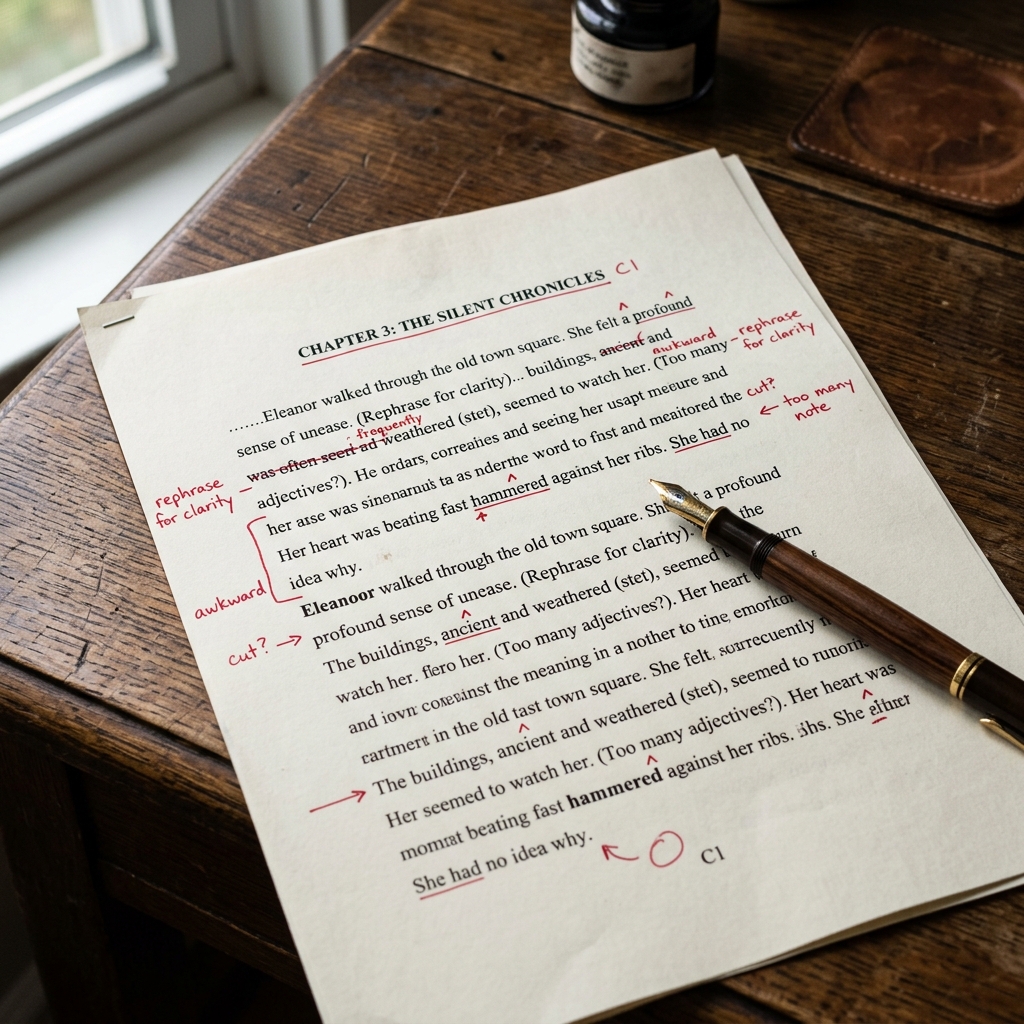
↳ This is the kind of line Prakash rewrites — on your SOP, with you, sentence by sentence.
Prakash has personally read, questioned, and rewritten 10,041+ SOPs, LORs, and visa documents for students applying to 100+ programs across 12+ countries — working directly with you, never through a sales team or a template library.
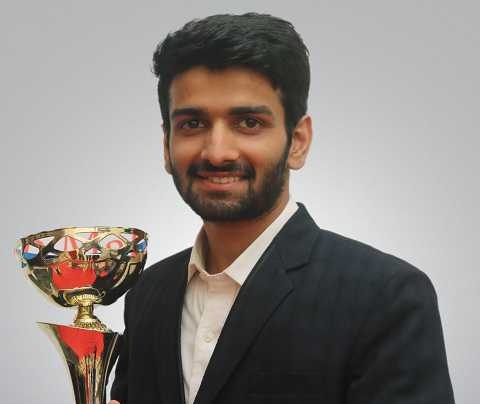
Prakash, Chief Writer
For 8.5+ years, Prakash has worked one-on-one with students applying to universities across Canada, the US, UK, Australia, Germany, South Korea, and more — reading their drafts, asking the questions a reviewer would ask, and rewriting until the SOP sounds like the person sitting across from him, not a template.
There's no in-house writing team, no outsourcing, and no SOP that goes out without Prakash personally working on it. If you're talking to SOP by Prakash, you're talking to the person who will write your document.
"A good SOP doesn't sound impressive. It sounds true." — Prakash
Every week, students arrive here after one of the experiences below. None of it is your fault — and all of it is fixable.
A consultant wrote it for you — and it reads like it. Admissions officers read thousands of SOPs a year. A ghostwritten one is rarely as invisible as the agency promised.
It came back "too polished." Every sentence is grammatically perfect and emotionally empty — and now you're worried it looks AI-generated, because often, it was.
You never met the person actually writing it. You spoke to a counsellor or a sales executive. The draft was handled by someone you've never spoken to, using a structure that's been reused for years.
It was rejected, and now the clock is louder. A refusal or resubmission request has eaten into your timeline, and you need a rewrite that's both fast and genuinely different — not a faster version of the same problem.
You wrote it with ChatGPT and you're not sure it's safe to submit. It sounds fine to you. You don't know how it sounds to a reviewer trained to notice the difference.
"Since childhood, I have been fascinated by [field] and have always dreamed of studying abroad to broaden my horizons and contribute to society."
↳ Replace the dream with the decision. What specific moment, project, mistake, or conversation actually moved you toward this program?
"My indefatigable zeal for academic excellence and unwavering commitment to societal betterment render me an exemplary candidate for this esteemed program."
↳ Say it the way you'd say it to a mentor, not a thesaurus. Confidence reads through plain sentences, not big ones.
If any of this sounds like your SOP, the fix isn't another rewrite from another stranger — it's working directly with the person who'll actually read and rebuild it.
Book Free ConsultationThe single most common mistake is using generic opening lines. Re-focusing on specific decisions builds credibility immediately.
Built from your academic record, work experience, and goals — not a template with your name dropped in. Prakash writes and edits every draft personally.
Guidance for your recommenders so the letter reflects how they actually know you, structured to match what reviewers in your target country expect.
Country-specific visa documentation that presents a clear, honest case for your intent — written for the officer reading it, not a generic checklist.
Before you commit to anything: a free, honest read of your profile — what's strong, what's missing, and what realistic program and country options look like.
A resume structured for academic and visa reviewers, whether you're applying with zero work experience or a full career history.
Editing and strategy across every document in your application, coordinated so your SOP, LOR, and resume tell one consistent story.
No intermediary, no pre-sales call with someone else. You describe your situation — program, timeline, concerns — directly to the person who will work on your SOP.
Prakash goes through your academic record, work experience, target country, and program requirements to understand what story your profile can support, and what's missing.
You receive a draft built around your profile. Prakash flags weak spots, asks follow-up questions where your story is thin, and revises until the language, structure, and tone all hold up.
You receive a final SOP (and supporting documents, if included in your package) with honest, practical notes on what to expect next — not vague reassurance.
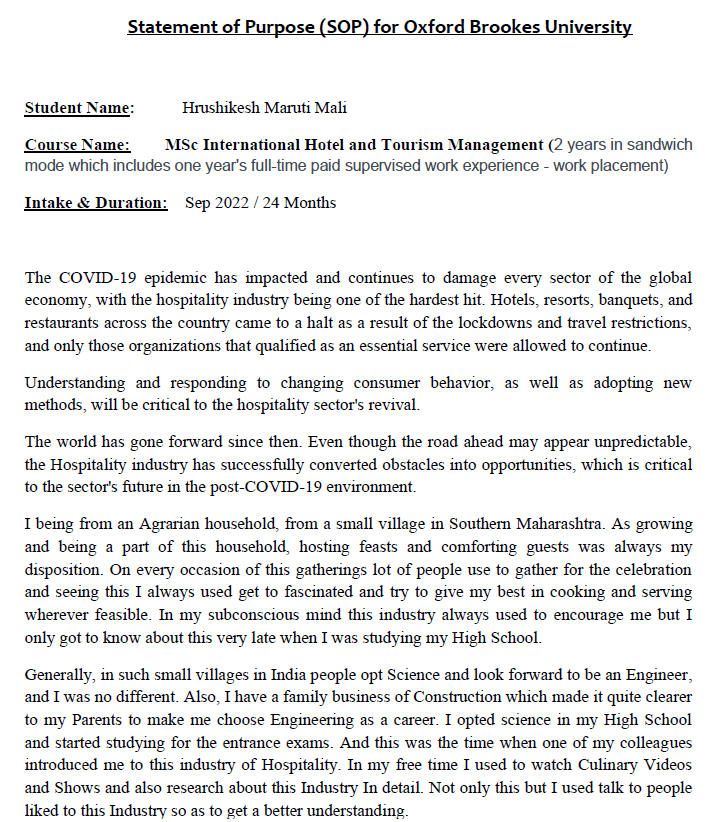
This is a sample for your understanding.
We write as per your level of English, otherwise we can have Shakespeare speak for you (your choice).
| Feature | Typical Agency Experience | Working With Prakash |
|---|---|---|
| Who writes it | Junior staff or an outsourced "content team" you never speak to | Prakash, personally, every time |
| The first draft | A reused structure with your details swapped in | Built from scratch around your profile and goals |
| AI involvement | Often AI-generated or AI-"polished," undisclosed | AI can be your tool — never ours. Every word is human-edited |
| Communication | Routed through a counsellor or sales executive | Direct conversation with the person writing your SOP |
| Pricing | Add-on charges appear as you go | One transparent package, confirmed before you start |
| Revisions | Limited, or charged separately | Structured review cycles included in every package |
| Promises | "Guaranteed admission" or "guaranteed visa" | No outcome guarantees — only a guarantee of effort, originality, and your deadline |
Most complaints about education consultants start with money — costs that appear after you've already paid for something else. Here's how packages work. Exact pricing is confirmed during your free consultation, based on your program and timeline, and never changes mid-way without your agreement.
One SOP, built from your profile, with structured review cycles. Best for a single program application.
Get StartedSOP plus recommender guidance for one application, so both documents tell a consistent story.
Get StartedSOP, LOR guidance, resume, and profile strategy across multiple programs or applications.
Note: You can expect high chances of approval as we do your filing and since other consultants leave you hanging with the MOST important part of your application.
SOPs are written differently depending on the program — a PhD SOP needs to demonstrate research fit, while a diploma SOP needs to demonstrate intent and progression. Prakash adjusts structure and tone to match what reviewers for each program type are actually looking for.
Visa officers read SOPs (or Letters of Explanation/Motivation) differently from admissions committees — they're assessing intent, ties, and credibility, not just academic fit. Country-specific expectations matter here more than almost anywhere else.
AI tools can help you think and draft — but most universities now run authenticity checks, and a visibly AI-shaped SOP can quietly work against a fee-paying application. The fix isn't necessarily starting over. It's a profile-first edit that keeps your real story and removes what makes a draft sound machine-written.
Common giveaway: sentences that are grammatically flawless but say nothing specific about you. A reviewer notices the second one before the first.
Each country has its own SOP and visa-document conventions — what a UK personal statement expects is different from a Canadian study-permit SOP, which is different again from a US graduate statement of purpose.
A sample of universities students have been admitted to after working on their SOPs here — not an exhaustive list, and not a promise of similar outcomes for every applicant.
An SOP is a written document, usually 800–1,200 words, where you explain why you're applying to a specific program, what in your background supports that choice, and what you plan to do afterward. Universities use it to assess fit and motivation; visa officers sometimes review a version of it to assess intent.
Many universities now use AI-detection and authenticity checks alongside human review. AI-generated text often has a recognizable rhythm — even when factually accurate, it can read as generic. A profile-first SOP, written and edited by someone who knows your background, is less likely to be flagged and more likely to sound like an actual applicant.
AI tools are useful for brainstorming or organizing your thoughts, but submitting AI-generated text directly carries risk — both from detection tools and from the SOP not reflecting your actual voice or specifics. The safer approach: use AI as a starting point, then have a human editor rebuild it around your real profile.
An SOP and a personal statement serve a similar purpose — explaining your motivation and fit for a program — but "personal statement" is more common terminology in the UK and for undergraduate applications. A Letter of Recommendation (LOR) is written by someone else, such as a professor or employer, vouching for you — not by the applicant.
Timelines depend on the package and how far along your draft already is, but most SOPs go through 2–3 structured review cycles after the first draft. If you're working against a tight deadline, mention this during your free consultation so the schedule can be planned around it.
Yes. A rejection or resubmission request usually means the SOP didn't address something specific, and that's identifiable and fixable. Rejection-stage SOPs are first reviewed for what likely went wrong before any rewriting starts.
No — and any consultant who does is making a promise they can't keep. Admission and visa decisions are made by universities and government officers based on far more than one document.
↳ This is the one promise worth being suspicious of when other consultants make it.
What's guaranteed here: original, profile-based writing, direct access to the person doing the work, and a realistic assessment of your case.
Pricing depends on the service — SOP only, SOP + LOR, or full application support — and how many programs or applications are involved. See the Pricing section above for current starting prices. Every quote is given in writing during the free consultation, before any payment.
"I was running out of time for my PhD SOP. Working through it with Prakash directly meant my publications and research proposal actually lined up with what the program was looking for."
"I'd already paid for an AI-rewritten SOP and wasn't confident in it. The version we rebuilt together felt like mine again, and my case presentation was noticeably stronger."
"The process was transparent from the start. We always knew exactly what was being changed and why."
What Canadian visa officers are actually looking for, and how it differs from a university admissions SOP.
Read Guide →
The terminology changes by country — here's what stays the same and what doesn't.
Read Guide →
The patterns reviewers notice, and how to edit them out without starting over.
Read Guide →Share your profile and target program, and Prakash will personally get back to you. This isn't routed through a sales team.